
A Man Who Could Be Easily Called "Dean of Northeast Racing"
A Man Who
Could Be Easily Called "Dean of Northeast Racing"
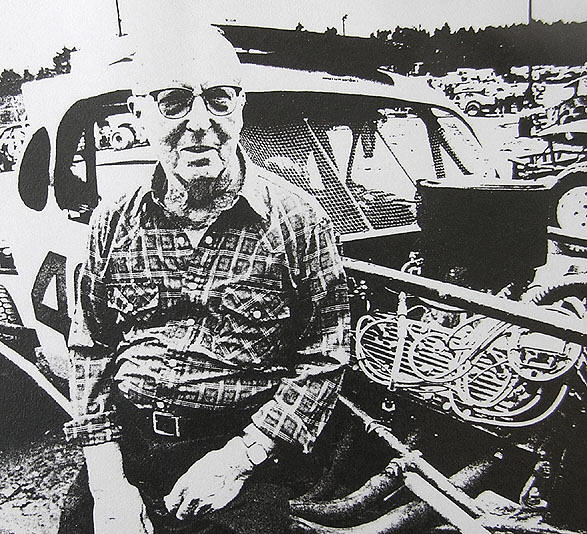
Courtesy of Cho Lee
George Barber, later on in his career, with his car at Bear Ridge Speedway.
It is
presumptuous for me to try and write up a bio on George Barber. 1.) there is far
too much about him to put in one web page; and 2.) Cho Lee would have known far more
knowledge on George than I. But, I don't have Cho, so here I go.
George Barber, proprietor of Bradford Auto
Supply in the
Connecticut Valley town of Bradford, Vermont, started getting involved in
Vermont - area stock car racing practically at its inception in the early
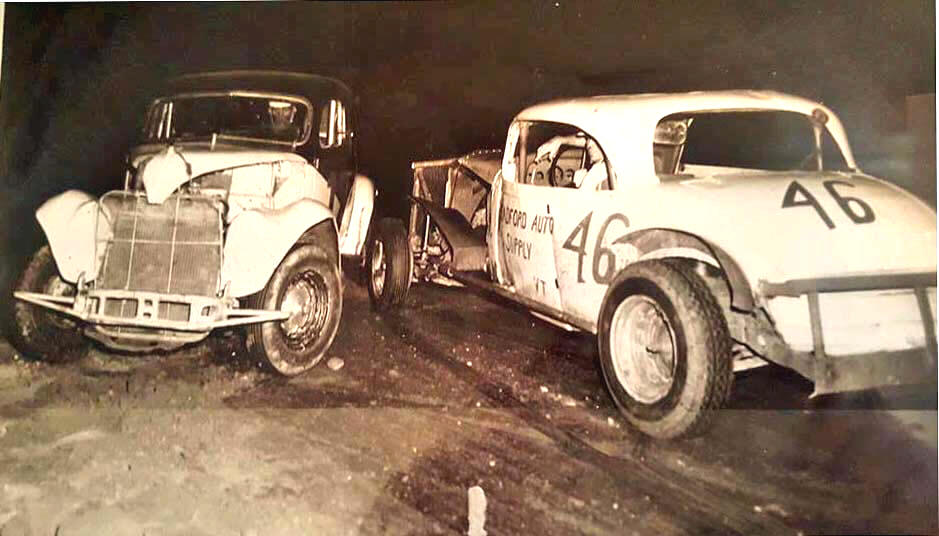
1950's. Photos of Barber's familiar cream-colored flathead Ford coupes began to
surface in state newspapers at such tracks as West Brattleboro, Stateline, and
maybe even Pico. I am sure he also tried the Cheshire Fairgrounds, in Keene, New
Hampshire and maybe Rhythm Inn near Millers Falls, Massachusetts.
STUB PIPER ERA
[The First Car]
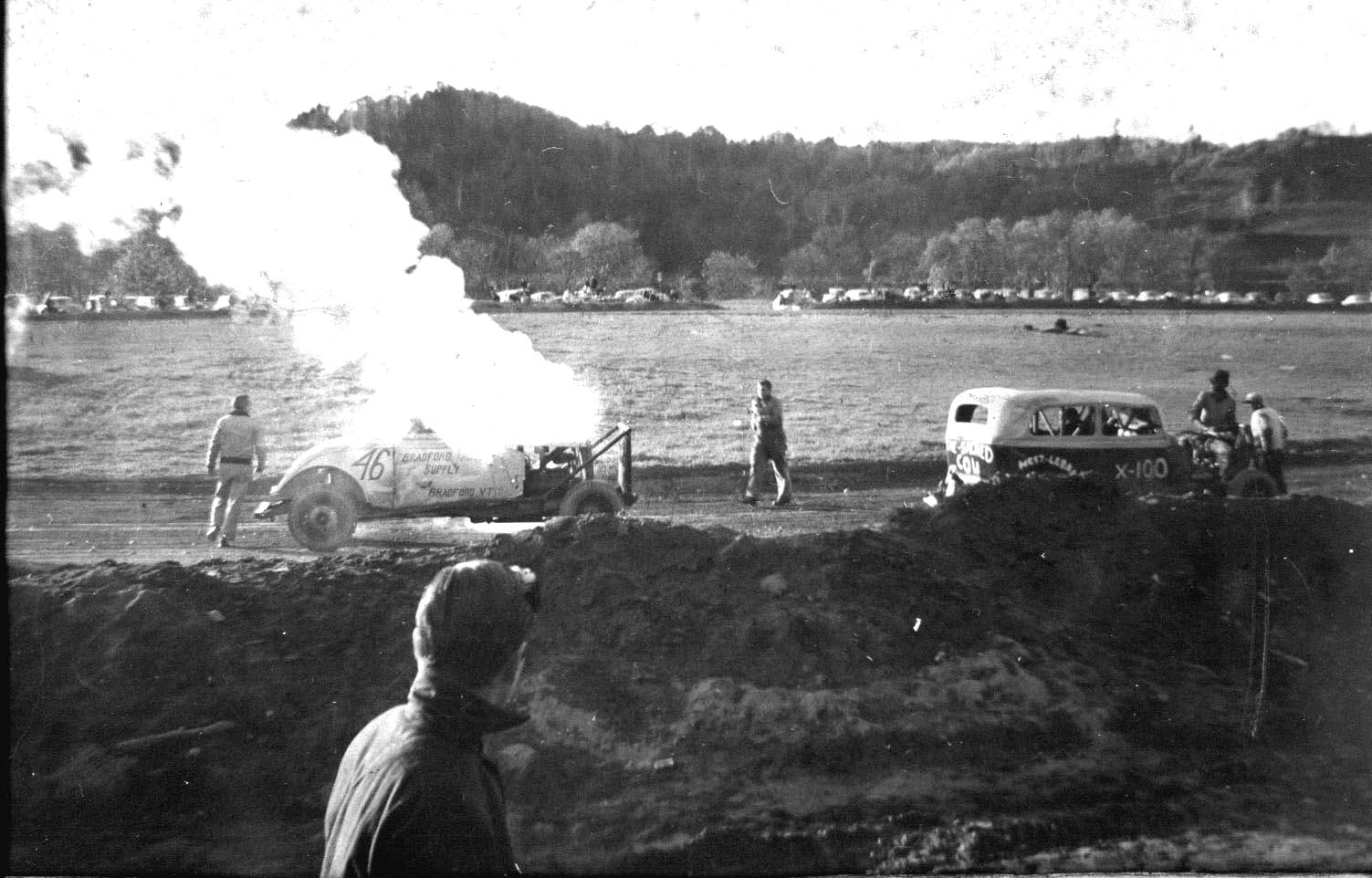 Barber Collection Courtesy of Cho Lee The original Barber coupe, probably with Piper, overheats at West Brattleboro |
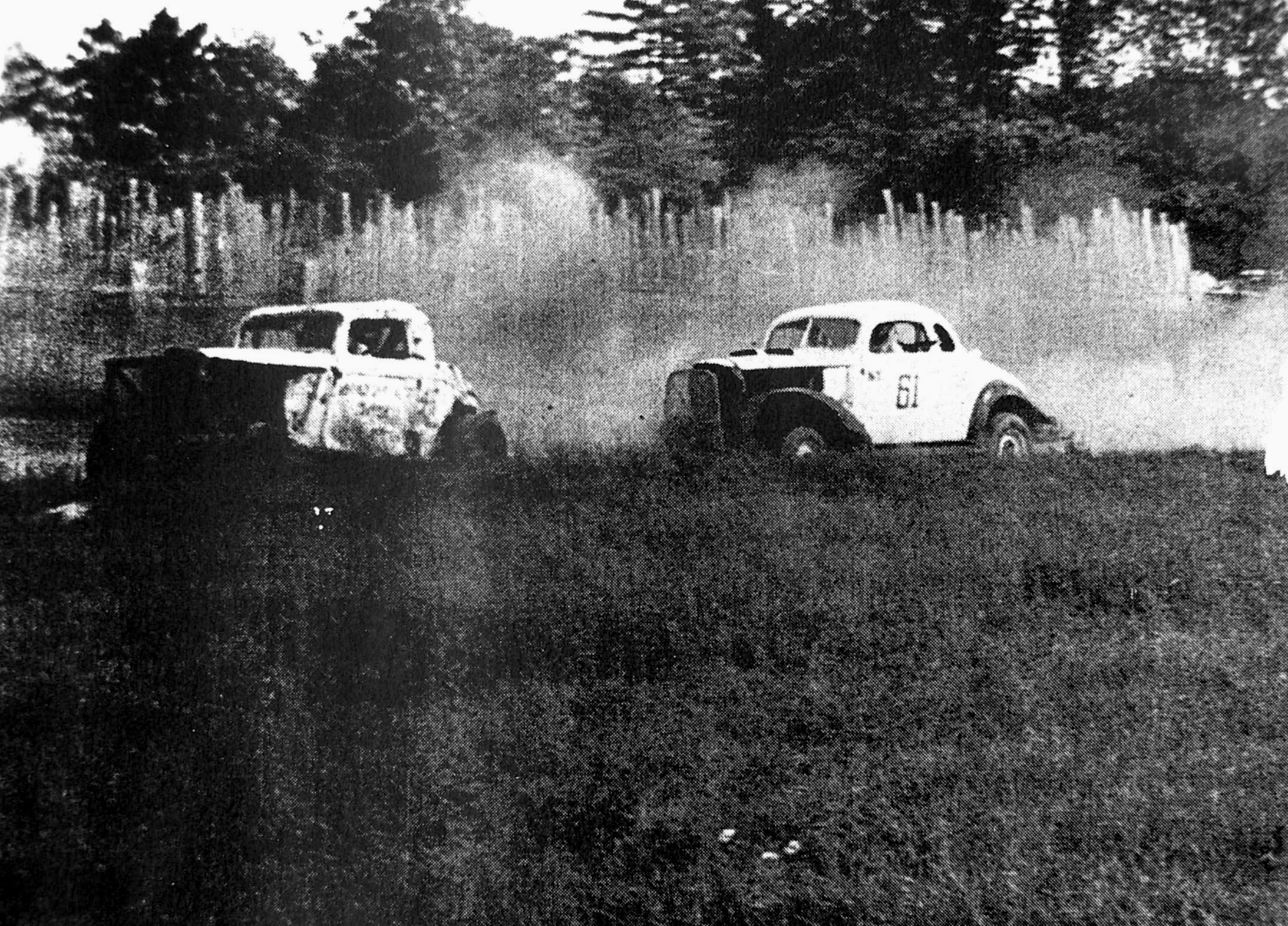 Barber Collection Courtesy of Cho Lee The original Barber coupe, with Piper or Forsythe, is chased by Steve Danish at Stateline. |
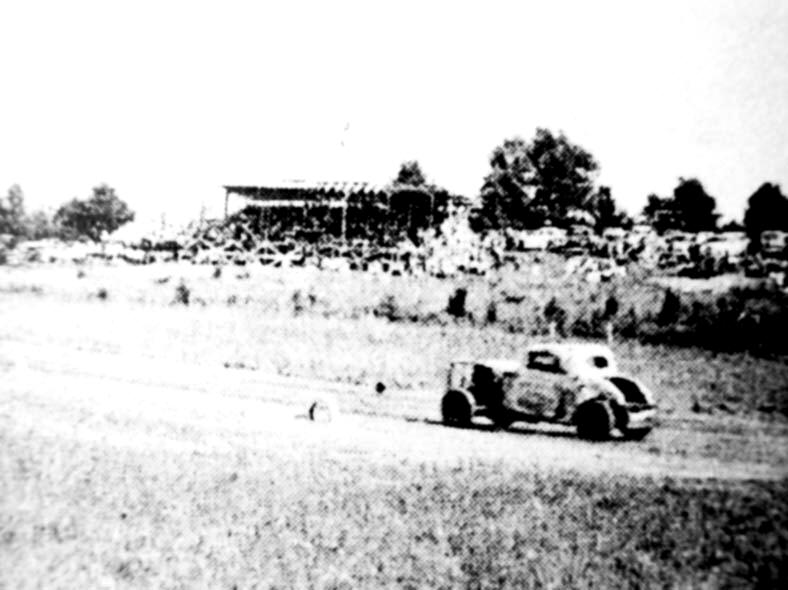 Source Unknown An early Barber car, at speed on an unfamiliar track. I don't recognize the stands. |
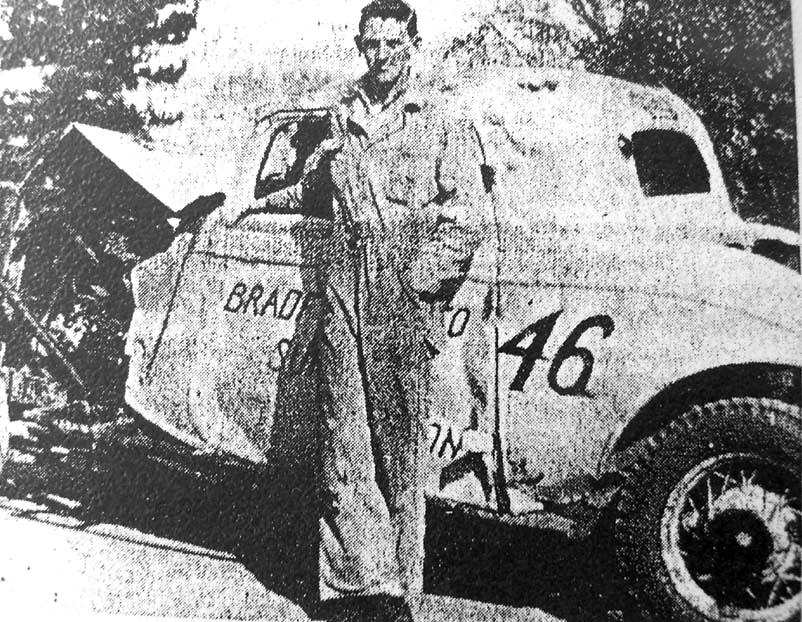 Scott Haskell Piper, with the first Barber car, which has seen better days, body - wise. |
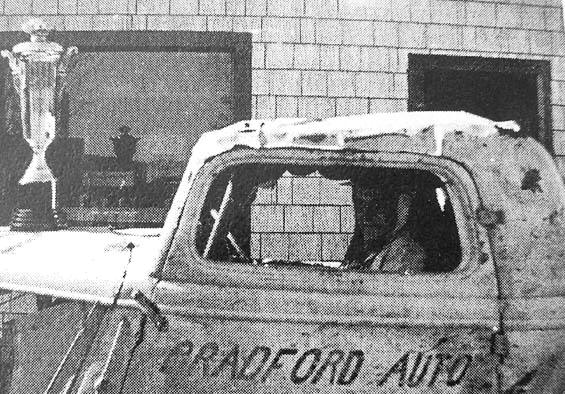 Barber Collection Courtesy of Cho Lee The original Barber coupe, with Piper and what is likely the championship trophy he won at Colchester Raceway. |
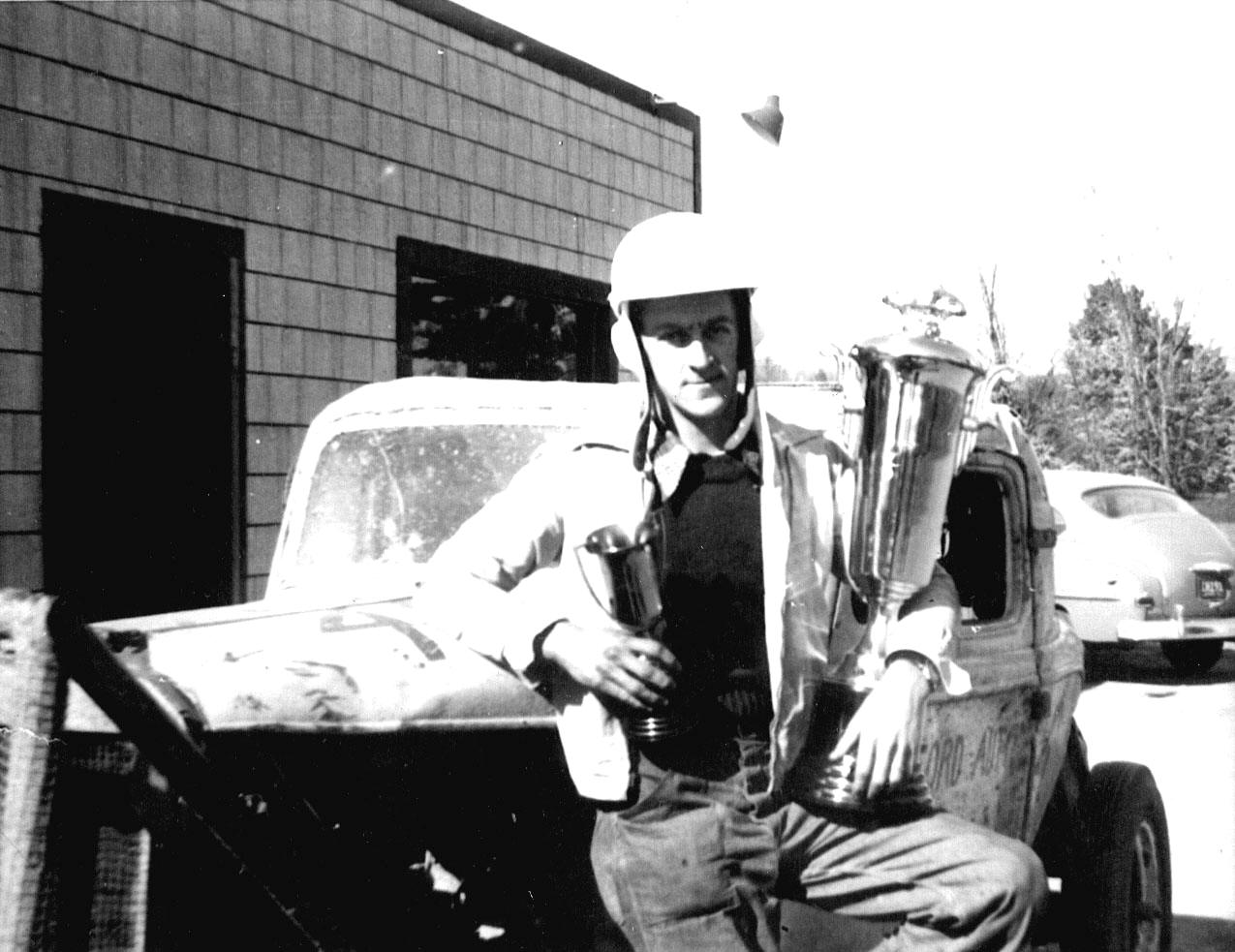 Barber Collection Courtesy of Cho Lee The original Barber coupe, with Piper and what is likely the championship trophy he won at Colchester Raceway. |
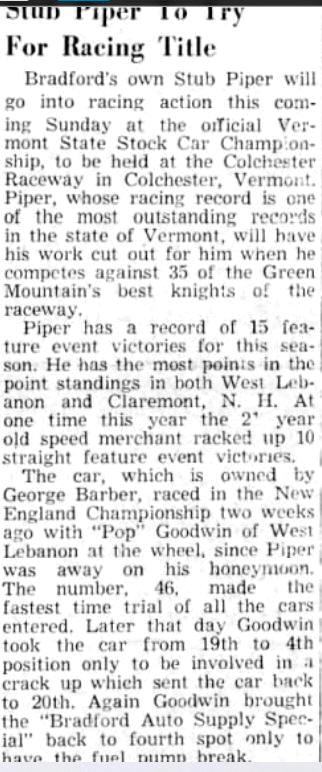 Bradford United Opinion About Stub at West Lebanon, NH, in 1950. The Goodwins owned that track. |
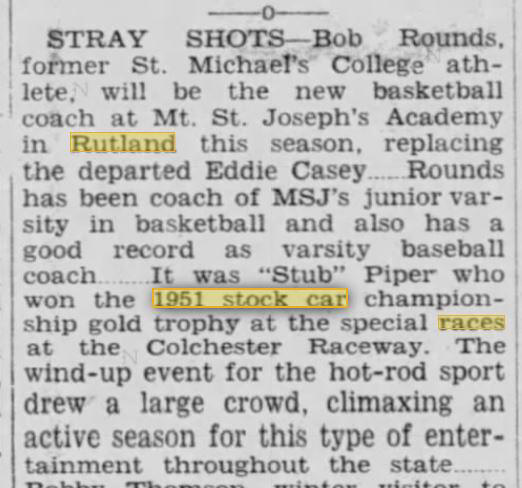 Newport Daily Express This 1951 article mentions the Colchester Raceway win. |
 Bradford United Opinion About some of Stub's success at the East Corinth jalopy track. 1950. |
 Bradford United Opinion About some of Stub's success at the East Corinth jalopy track. Earlier in 1950. |
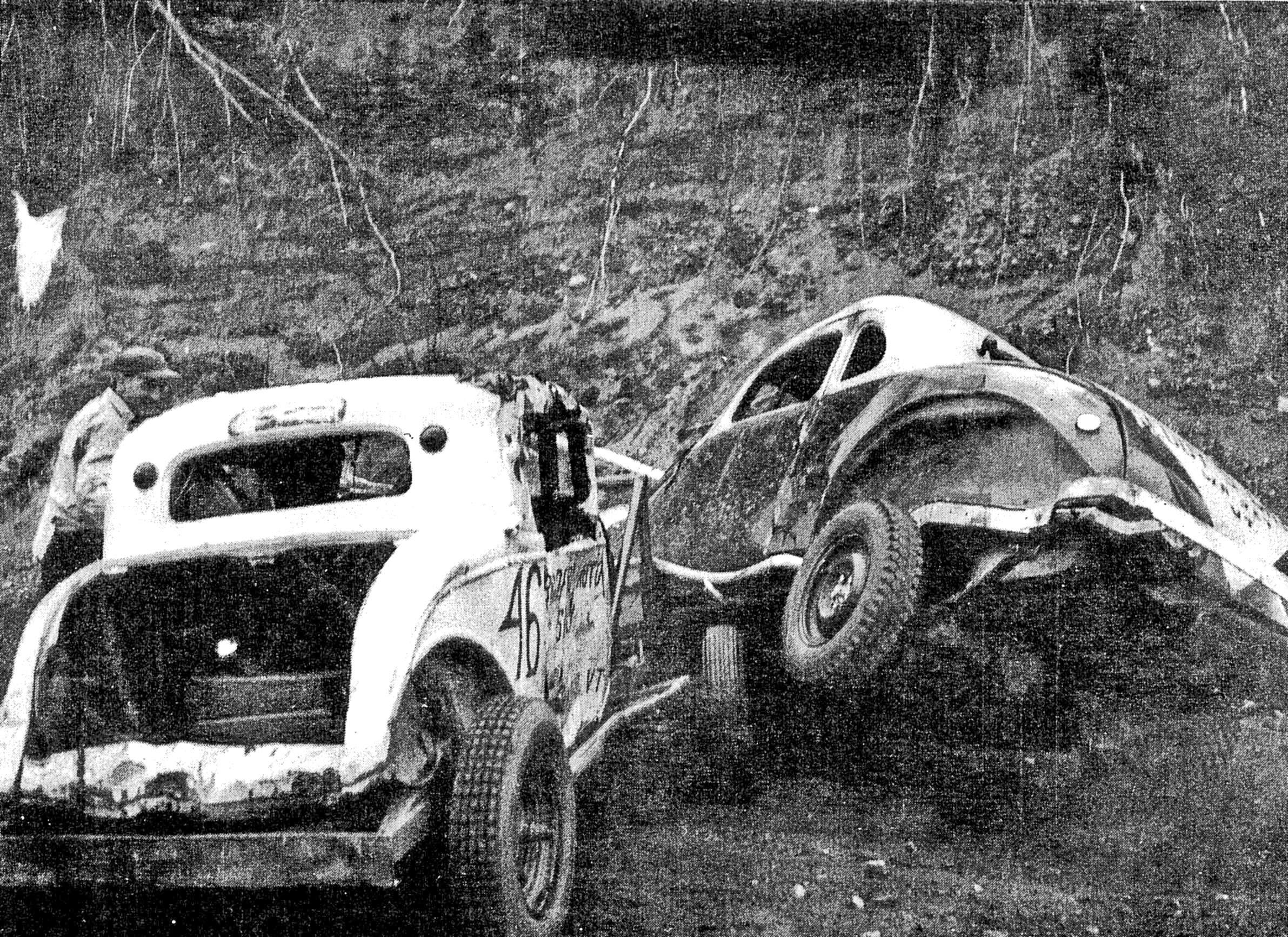 Marty Harty Collection An early shot of that fast and ratty first car, involved in a wreck at Claremont Speedway. |
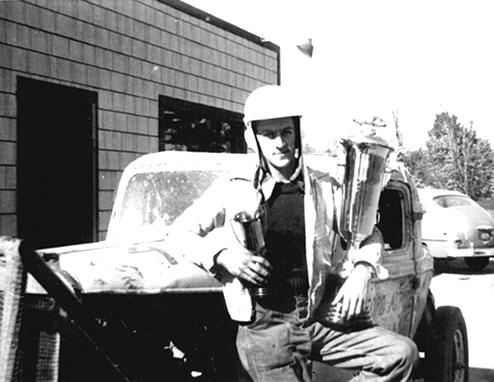 McIver Portrait Photo Barber Collection Courtesy of Cho Lee Stub Piper, George's first driver, had a less formal portrait. |
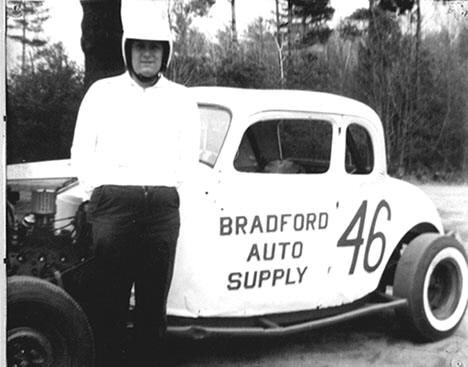
George's first driver of his original team [#46] was
Stub Piper. There are pictures of Stub at some of the previously - mentioned
tracks in the early 1950's, which suggests George was not afraid to range quite
a ways from home in search of the best stock car competition. When Barber was
starting, the races at Cheshire Fairgrounds were being starred at - and
sometimes run by - a good - looking driver named Pappy Forsythe. After a bit,
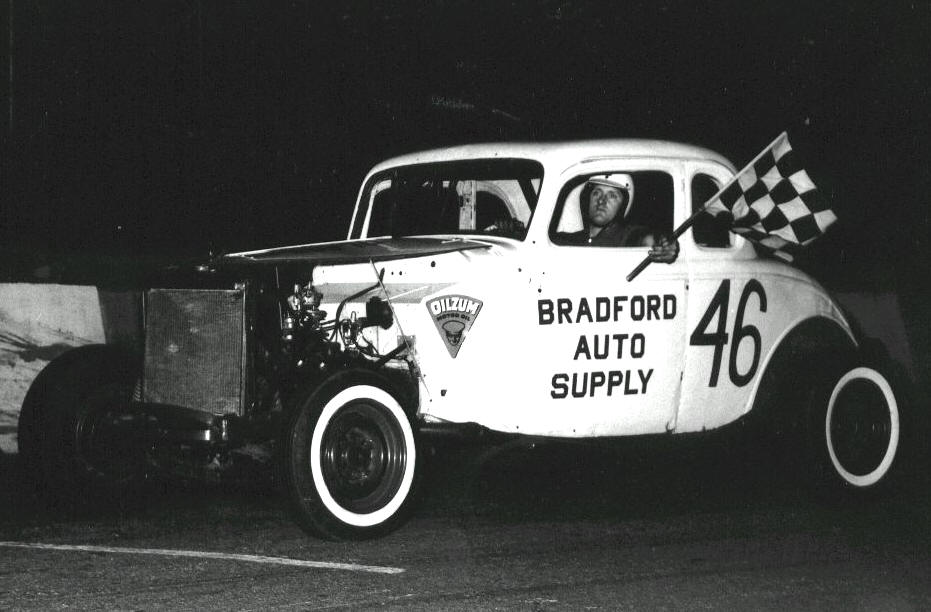
Forsythe got on board with Barber and began a long run of driving the #46. One
picture shows Forsythe [or possibly Piper] chasing the legendary Steve Danish
around Stateline Speedway in North Bennington, Vermont around 1954 or 5.
EARLY ROY FORSYTHE ERA
[The Second
Car]
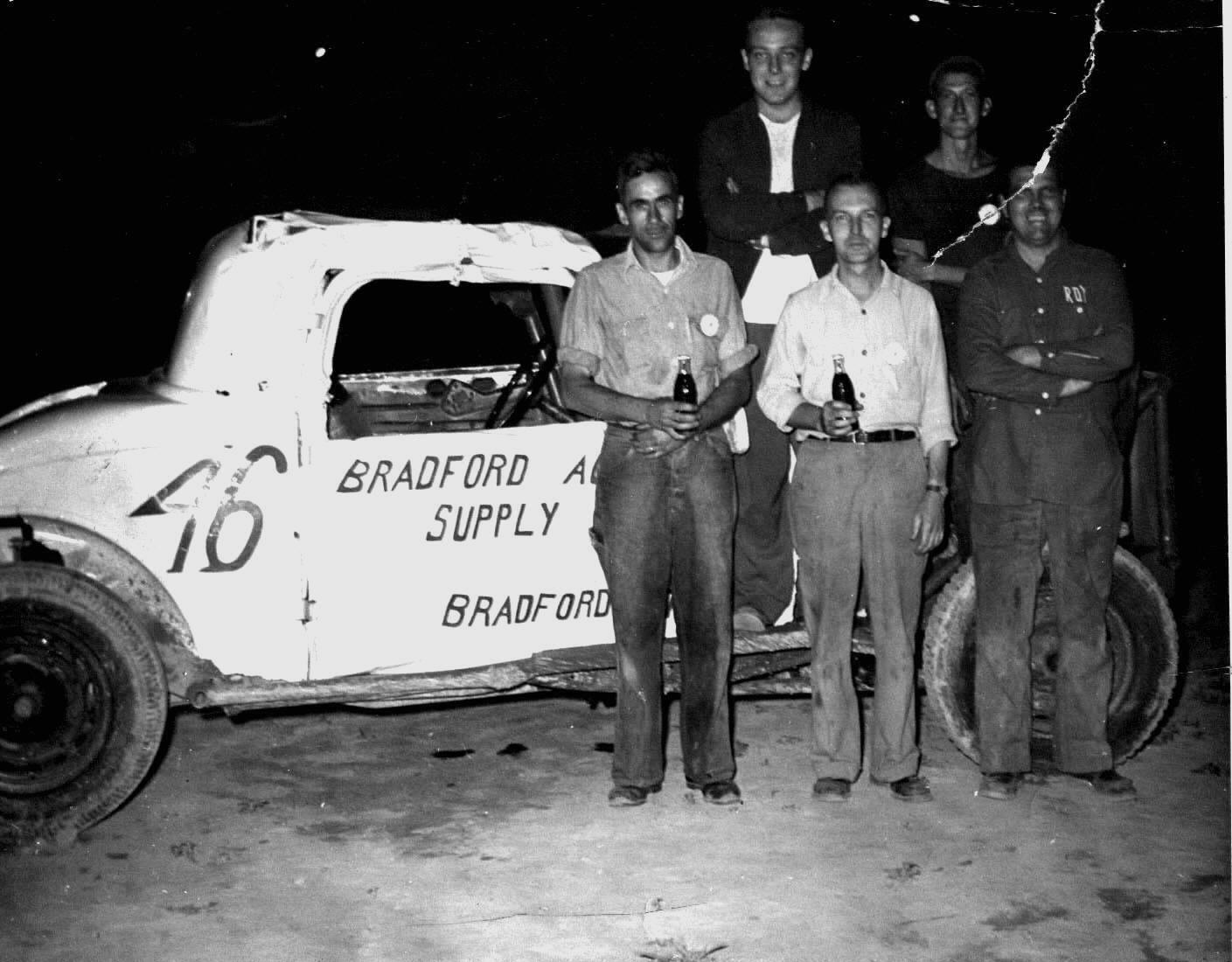 Les King Photo Barber Collection Courtesy of Cho Lee Barber, Forsythe, and crew pose with Cokes in Victory Lane at Stafford Springs, CT. They were told not to come back until the car was presentable. |
 Barber Collection Courtesy of Cho Lee Another shot of George & Pappy winning a race at Stafford Springs, CT. |
|
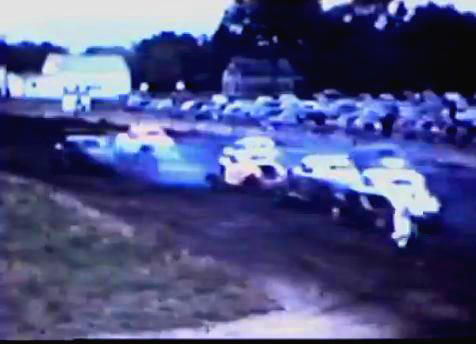 Courtesy of 8MM Footage From Bud Brooks An early Barber car, at the old Fairmont Park. The car [no trunk lid] heads off into Turn 1. |
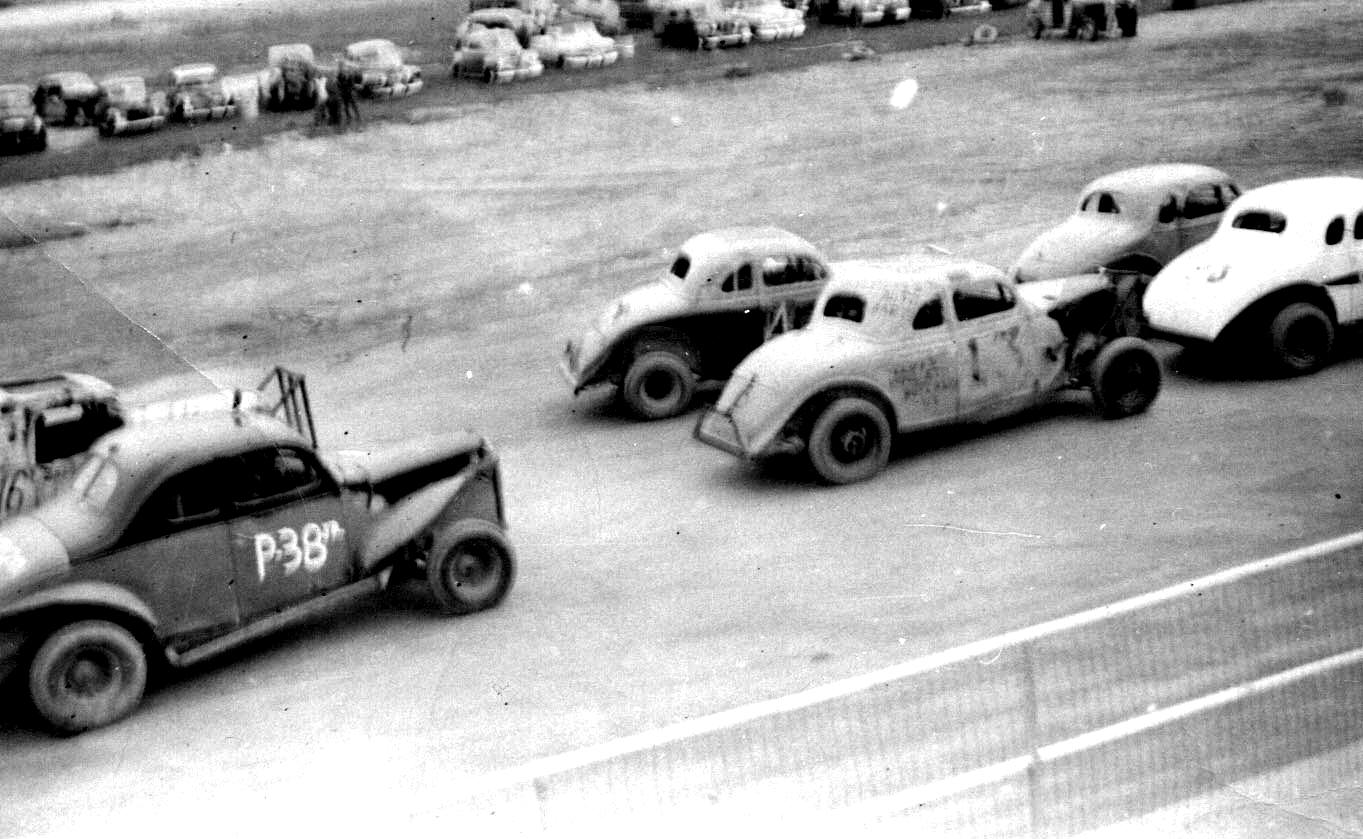 Courtesy of 8MM Footage From Bud Brooks An early Barber car, at Pico Raceway - next to the Loomis P38 - likely than driven by Ward Latterall. |
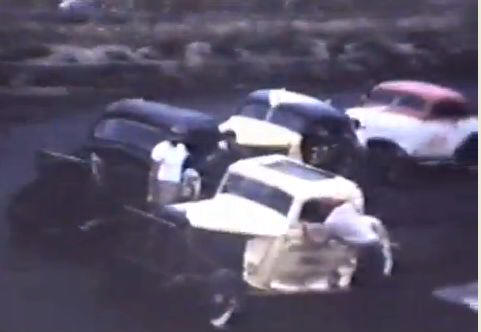 Courtesy of 8MM Footage From Bud Brooks An early Barber car, at the old Fairmont Park Motor Speedway in Fair Haven, VT in 1951. |
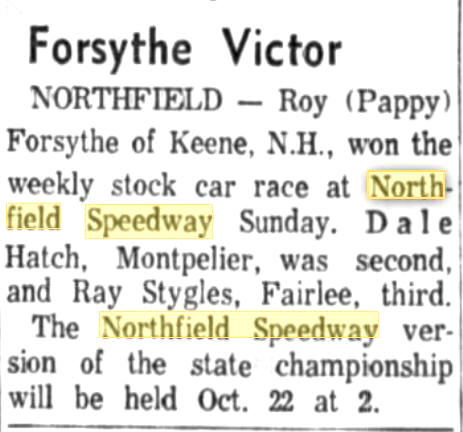 Burlington Free Press Barber and Forsythe did not go to the track in Northfield as much as some. They won this one. |
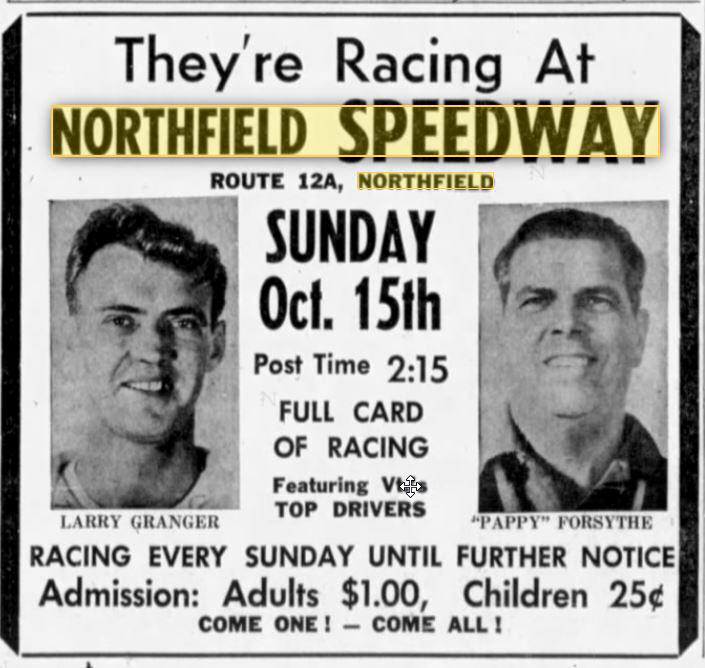 Barre/Montpelier Times Argus Barber and Forsythe did not go to the track in Northfield as much as some. After they won the Oct. 6, the track featured Roy beside Granger, who would succeed him in the 46 a few years later. |
 Barre/Montpelier Times Argus Barber and Forsythe responded by winning the next race, too. |
 Courtesy of Mike Gilbert The Barber/Forsythe car actually at Northfield around 1961. |
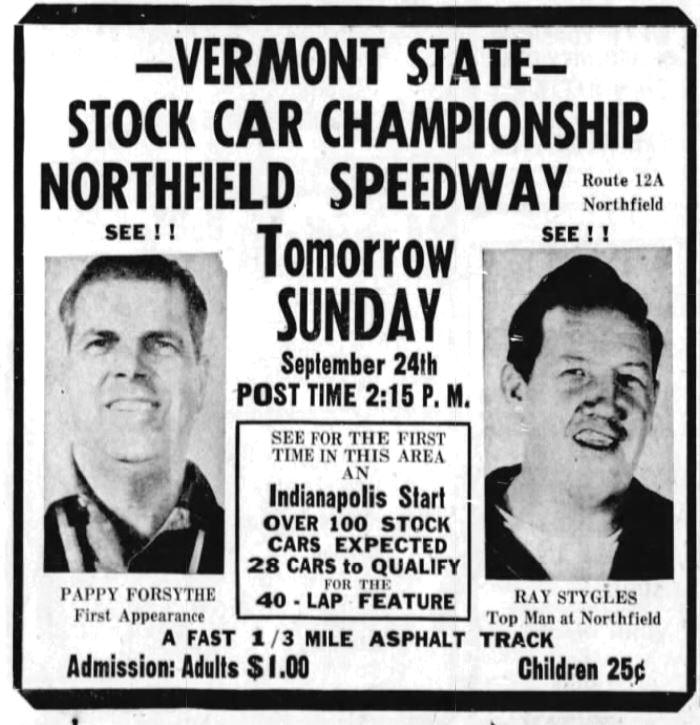 Barre/Montpelier Times Argus Watch out Ray, here comes Pappy. |
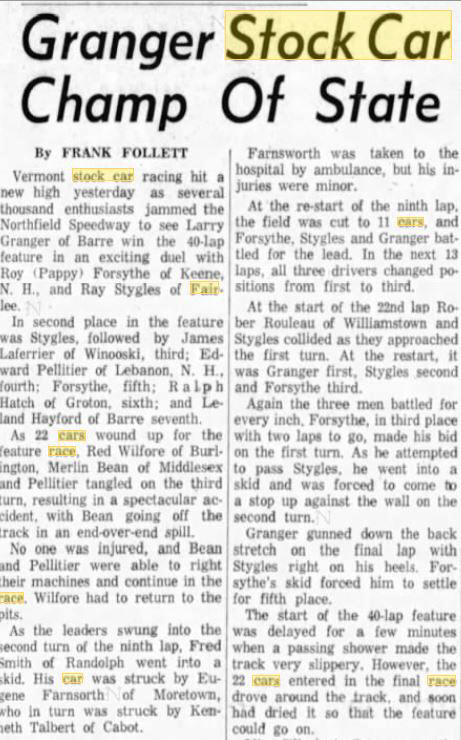 Barre/Montpelier Times Argus The future driver of the 46 edges out the current driver in the September championship race. |
 Barre/Montpelier Times Argus This article announces the debut of the 46 team at Northfield. |
Forsythe and Barber were
effective right away. Another shot from that same approximate time period shows
Barber, Forsythe, and crew holding unopened bottles of Coca-Cola and being the apparent recipients of a championship feature win at [as George's caption puts
it] "a New York track". That turns out to be Stafford Springs,
Connecticut. Some Forsythe material shows him driving his own car 80 at
what would seem the same time as he was supposedly driving for Barber. I haven't
figured this out yet. I would suspect he ran both cars at different times in the
same years.
Eventually they
would run closer to home to run some
of the tracks in Colchester, Vt., at Northeastern Speedway in Lower Waterford,
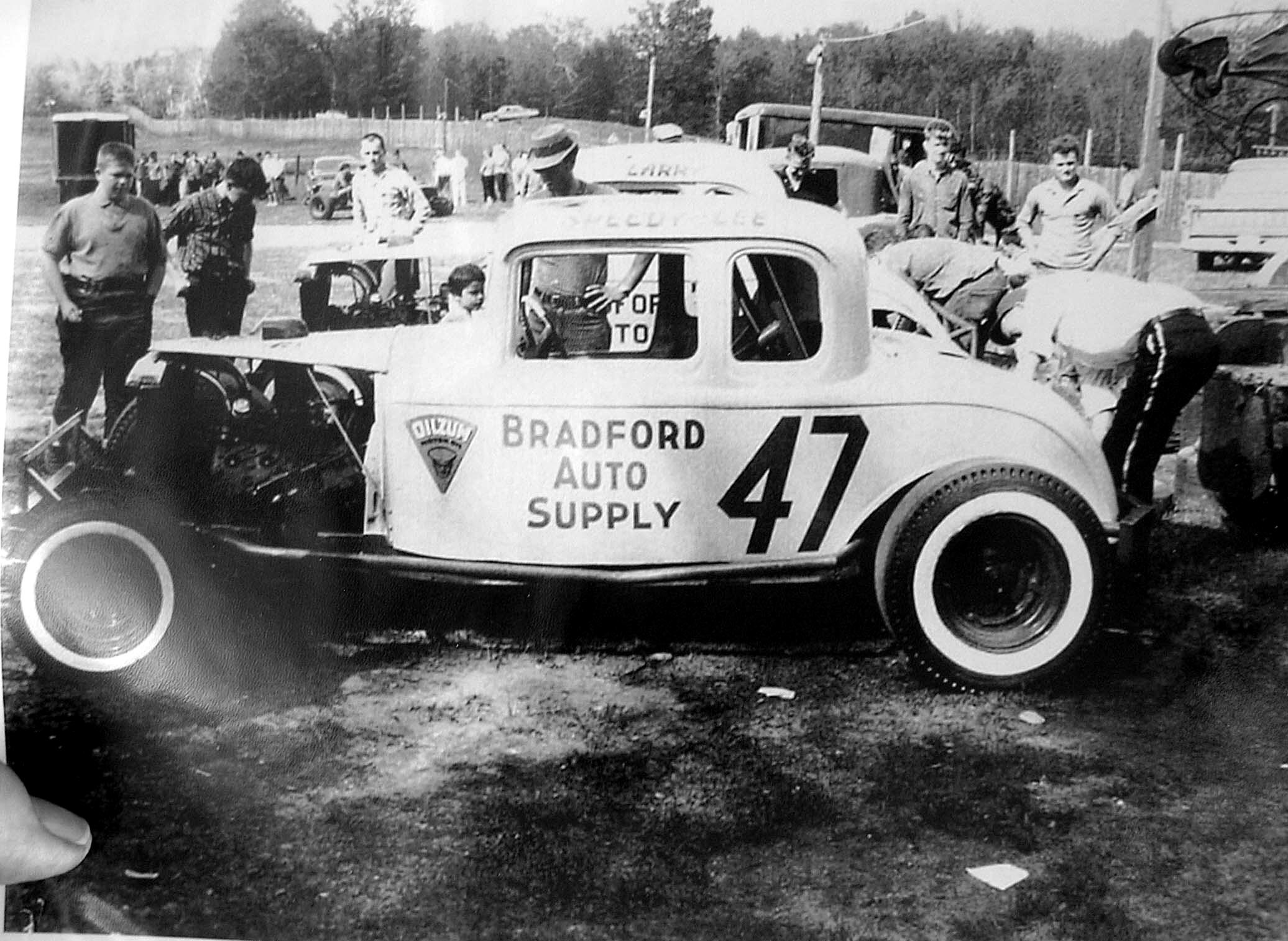
Vt., and - by 1960 - at Barre's Thunder Road. It was here that Barber added a second, nearly
identical coupe #47 with the same graphics, driven by New Hampshire's Leland
Ingerson, the eldest of four racing brothers. Barber's team was extremely
successful at Barre and Northeastern, with Forsythe finally being replaced by
Libero Buzzi's driver, Larry Granger. The team continued to make a name for
itself until NASCAR came to T Road in 1965 and the flathead - engined pre- 1936
coupe were phased out.
THUNDER ROAD ERA
[The Early 1960's Cars]
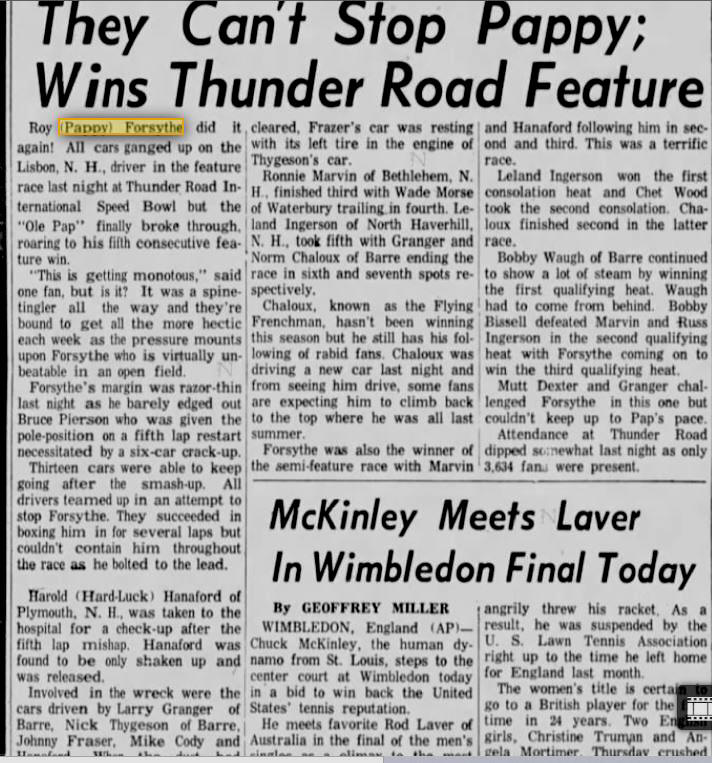
Barre/Montpelier Times Argus
This
article pretty much tells how Barber and Forsythe fared when they first ran T
Road in 1961.
 Barber Collection Courtesy of Cho Lee Forsythe wins another for Barber at Thunder Road. Larry Granger and Peter Pierson are at right. |
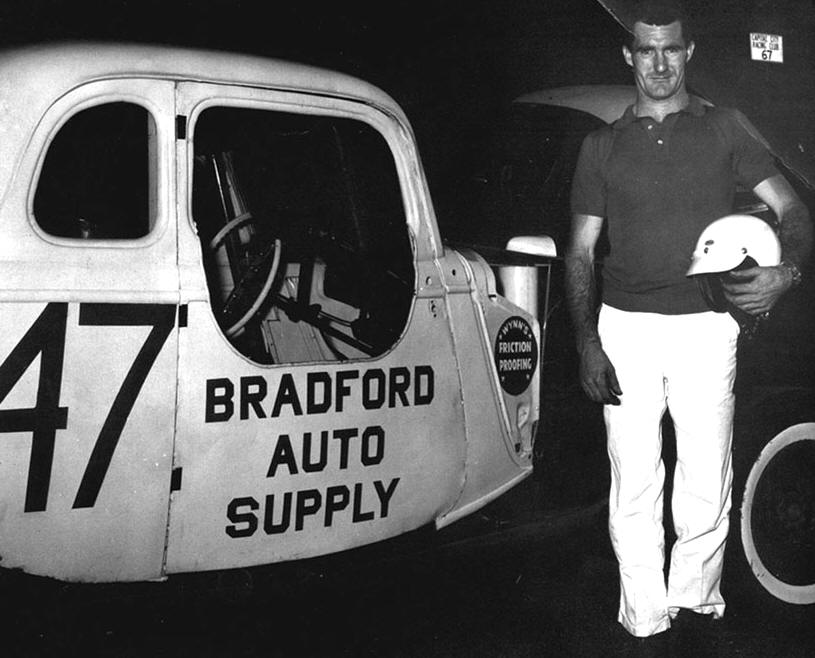 Barber Collection Courtesy of Cho Lee Lee Ingerson with the second Barber car. |
 Barber Collection Courtesy of Cho Lee Lee Ingerson [left]| joins brother, Doug & Johnny Gammell in T Road Victory Lane |
 Barber Collection Courtesy of Cho Lee George Barber's cars at T Road: Pappy Forsythe 46 & Leland Ingerson 47 |
 Barber Collection Courtesy of Cho Lee George Barber [right] and Pappy Forsythe are trophied at T Road around 1960.
|
||
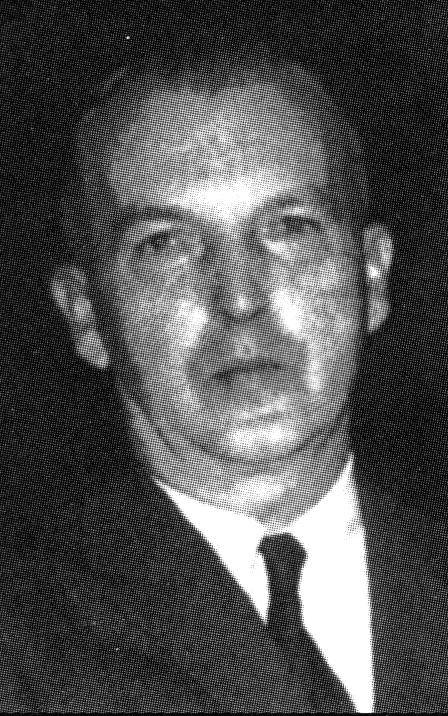 NEAR Portrait Photo George Barber. |
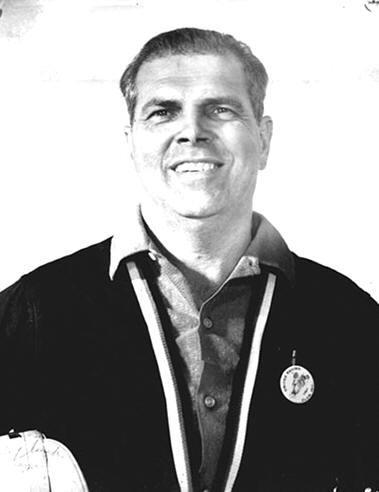 McIver Portrait Photo Barber Collection Courtesy of Cho Lee Pappy Forsythe, the first of George's drivers to be posed for a portrait.
|
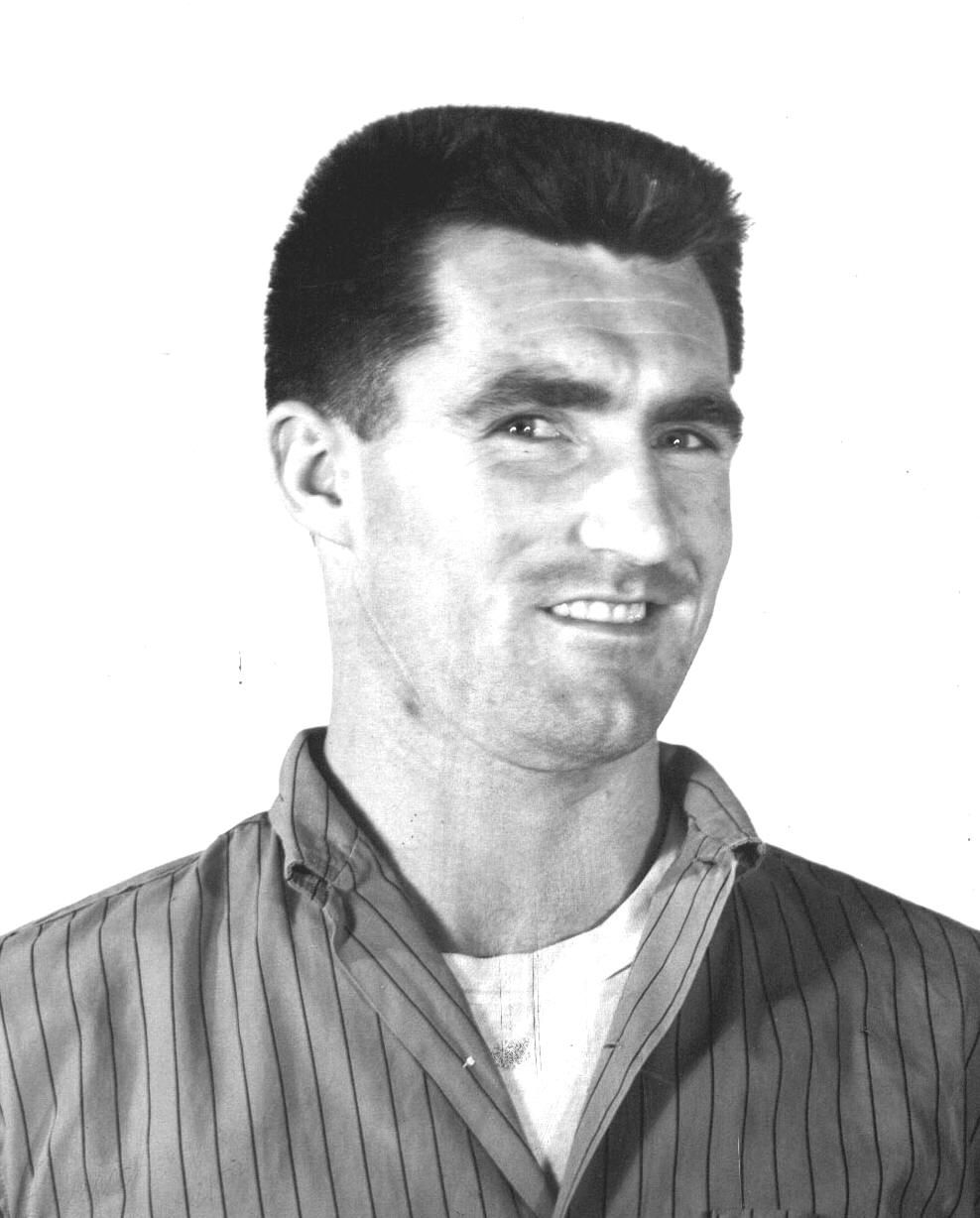 McIver Portrait Photo Barber Collection Courtesy of Cho Lee Lee Ingerson's McIver portrait. |
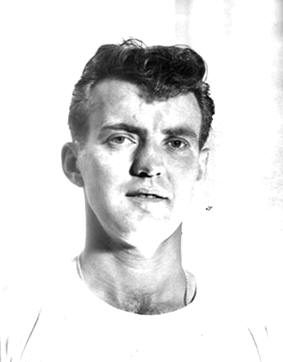 McIver Portrait Photo Barber Collection Courtesy of Cho Lee Larry Granger, Pappy Forsythe's replacement. |
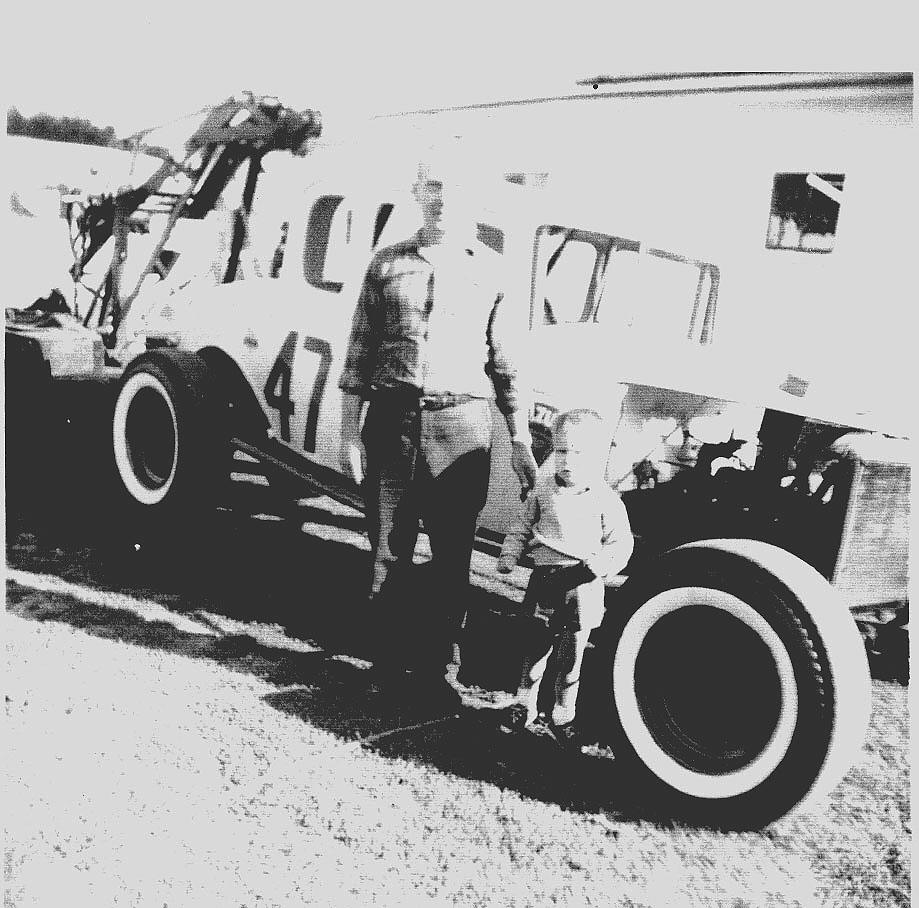 Courtesy of Barbeer Collection George Barber car, at home with son, Frank. |
||
 Barber Collection Courtesy of Cho Lee Barber watchers make a lot out of the fact that this Lee Ingerson [maybe the first ?] was the only 1932 Ford out of his fleet of numerous 1934's. |
 McIver Portrait Photo Barber Collection Courtesy of Cho Lee Ray Coffin, Jr., the last of George's drivers at Thunder Road. |
 McIver Photo Barber Collection Courtesy of Cho Lee More of Junior Coffin. |
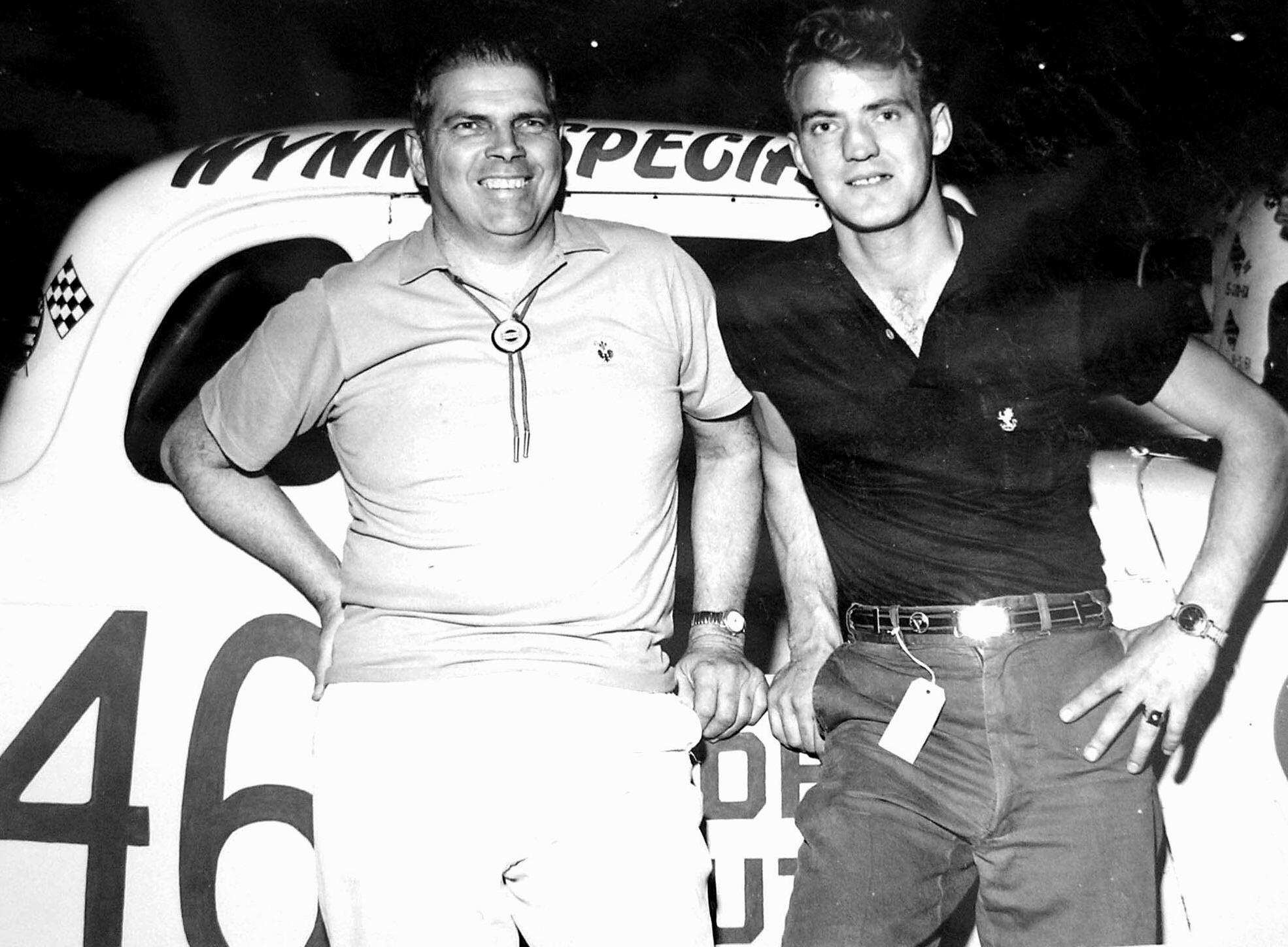 McIver Photo Barber Collection Courtesy of Cho Lee Forsythe poses with his replacement after his retirement was announced. |
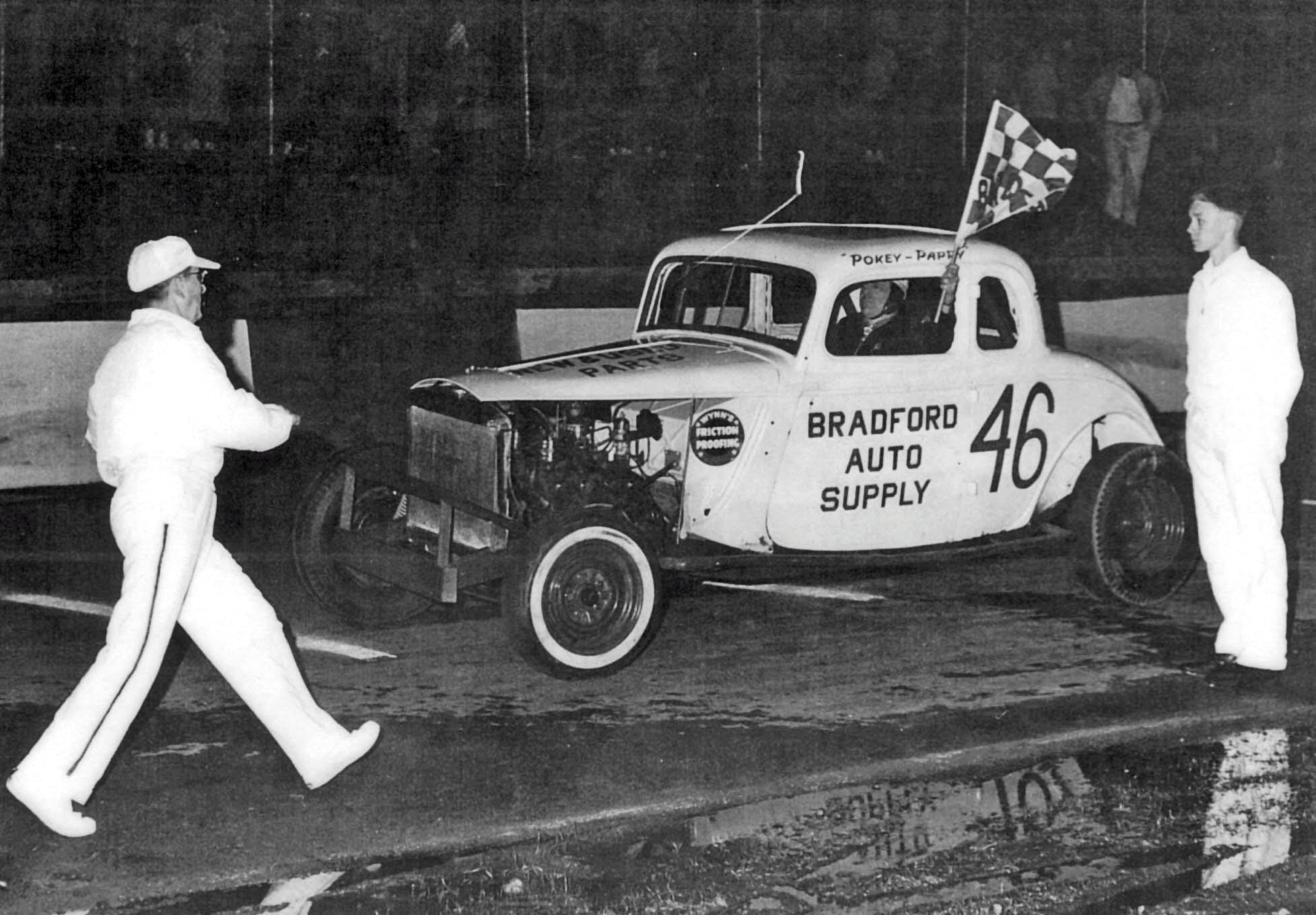 Courtesy of Mark Austin Pappy returns the flag to Archie. |
||
 Barre/Montpelier Times Argus A 1961 T Road win. Ironically, the same page features Larry Granger geting a haircut. |
1960 Apparently the team did not run T Road much in 1960. There aren't any news clippings for it. 1961  Barre/Montpelier Times Argus A 1961 Forsythe editorial Part 1. |
 Barre/Montpelier Times Argus A 1961 Forsythe editorial Part 2. |
 Barre/Montpelier Times Argus A 1961 Forsythe editorial Part 3. |
 Barre/Montpelier Times Argus A "Forsythe Re-Instated" article. |
||
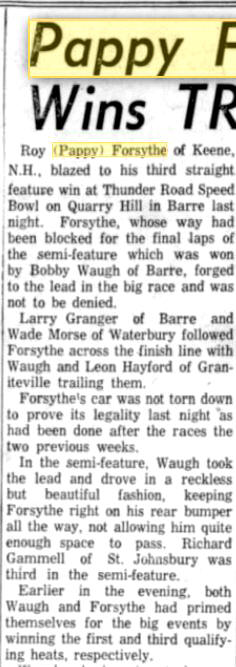 Barre/Montpelier Times Argus A June, 1961 Forsythe win Part 1. |
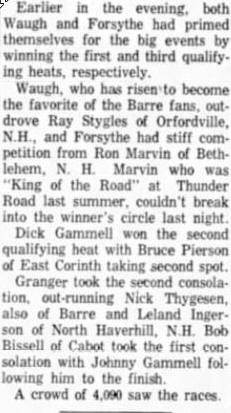 Barre/Montpelier Times Argus A June, 1961 Forsythe win Part 2. |
 Barre/Montpelier Times Argus A July,1961 Forsythe article Part 1. |
 Barre/Montpelier Times Argus A July,1961 Forsythe article Part 2. |
 Barre/Montpelier Times Argus A July,1961 Forsythe article Part 3. |
||
 Barre/Montpelier Times Argus A July,1961 Forsythe photo |
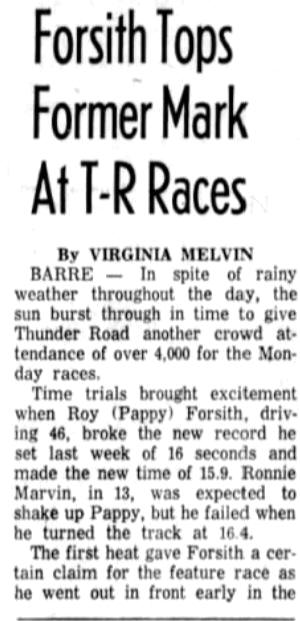 Barre/Montpelier Times Argus A May,1961 Forsythe article Part 1. [or should we say "Forsith". |
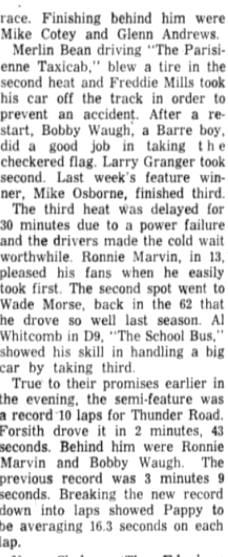 Barre/Montpelier Times Argus A May,1961 Forsythe article Part 2. [or should we say "Forsith". |
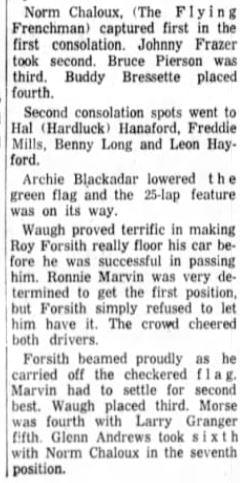 Barre/Montpelier Times Argus A May,1961 Forsythe article Part 3. [or should we say "Forsith". |
 Barre/Montpelier Times Argus A November,1961 T Road banquet article. Forsythe tops in points. |
||
 Barre/Montpelier Times Argus A Mayn October Article on the first Milk Bowl. Hanaford won and Forsythe was 2nd. |
 Barre/Montpelier Times Argus A September,1961 Article. Forsythe way aheadl 2nd place up for grabs. Part 1. |
 Barre/Montpelier Times Argus A September,1961 Article. Forsythe way ahead. 2nd place up for grabs. Part 2. |
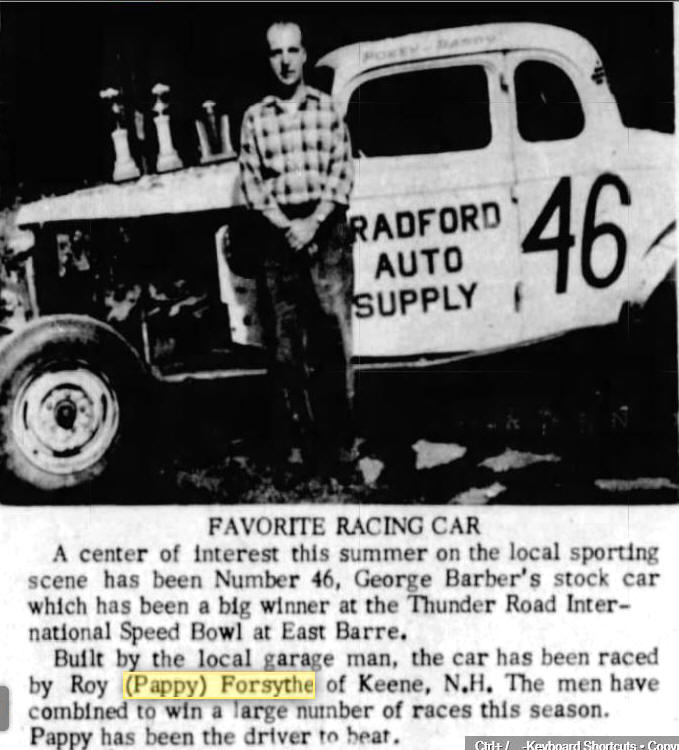 Bradford United Opinion A local paper article gives Barber some credit. The paper followed everything Barber's team did in the early '50's. |
 Barre/Montpelier Times Argus A July 3rd,1961 Article. Drivers all after Forsythe. The next year would not go so well. Injuries, age, and a team mate whose car may hav been faster meant a less successful season. |
||
|
1962 There were much fewer press articles for this season.  Barre/Montpelier Times Argus An August 1962 article. Barber had Added the 2nd car [47] driven by Lee Ingerson and he was leading Forsythe in the point standings. |
 Barre/Montpelier Times Argus An August 1962 part of an article that tells how Forsythe's track record was still standing. |
 Barre/Montpelier Times Argus A June 22,1962 Article. Forsythe is injured one of the two times it happened that year. |
 Barre/Montpelier Times Argus A September,1962 Article. Forsythe somewhat doubtful due to injuries. It appears that he retired at season's end. Lee Ingerson, in the other Barber car would succeed Forsythe as track champion in 1962 and 1963. |
1963 Barre/Montpelier Times Argus A July article. After a slow start, Granger began to improve in leaps and bounds. |
||
 Barre/Montpelier Times Argus A June,1963 Article. Leland wins. He will win 3 more by July 11, a total of six - including the Milk Bowl Part 3. Granger is mentioned here but his car is not clear. |
 Barre/Montpelier Times Argus A June,1963 Article. This kind of encapsulates how the season was going for Leland. |
 Hardwick Gazette A May 1963 adv. It's all on the radio now. |
 Barre/Montpelier Times Argus A June,1963 Article. Mid Season Championship. Granger on the upswing and Leland staying steady. |
 Barre/Montpelier Times Argus An August,1963 Article. Low budget Woods wins and Vincent is injured. Lee was finishing in the top 3 regularly while not much was heard from Granger in the 46. He would get going after a slow start in '63. Part 1. |
||
 Barre/Montpelier Times Argus An August,1963 Article. Low budget Woods wins and Vincent is injured. Lee was finishing in the top 3 regularly while not much was heard from Granger in the 46. Part 2. |
 Barre/Montpelier Times Argus An August,1963 Article. Low budget Woods wins and Vincent is injured. Lee was finishing in the top 3 regularly while not much was heard from Granger in the 46. Part 3. |
 Barre/Montpelier Times Argus An August,1963 Article. Leland is still not winning much and Granger doesn't appear in the results. Part 1.  Barre/Montpelier Times Argus An August,1963 Article. Leland is still not winning much and Granger doesn't appear in the results. Part 2. |
 Barre/Montpelier Times Argus A June,1963 Article. Leland wins. He will win 3 more by July 11, a total of six - including the Milk Bowl Part 1.  Barre/Montpelier Times Argus A June,1963 Article. Leland wins. He will win 3 more by July 11, a total of six - including the Milk Bowl Part 2. |
 Barre/Montpelier Times Argus An August,1963 Article. Leland favored to win the Milk Bowl |
||
 Barre/Montpelier Times Argus A September,1963 ad for the Milk Bowl. |
 Barre/Montpelier Times Argus An October,1963 Article. Lee wins the Milk Bowl. Part 1. |
 Barre/Montpelier Times Argus An October,1963 Article. Lee wins the Milk Bowl. Part 2. |
1964 The Last Year I can Verify he Ran Cars at T Road  Barre/Montpelier Times Argus A May,1964 Article. Things were looking good for Granger. |
 Barre/Montpelier Times Argus A May,1964 Article. A curious note about Granger's car number. Part 1. |
||
 Barre/Montpelier Times Argus A May,1964 Article. A curious note about Granger's car number. Part 2. |
 Barre/Montpelier Times Argus A May,1964 Article. The paper's idea of a cutdown quite different from the cutdowns of southern New England. Part 1. |
 Barre/Montpelier Times Argus A May,1964 Article. The paper's idea of a cutdown quite different from the cutdowns of southern New England. Part 2. |
 Barre/Montpelier Times Argus A photo of the Barber car driven by Larry Granger. I think it was getting on in age. |
 Barre/Montpelier Times Argus A photo of the Ingerson car, on two wheels. |
||
 Illustrated Speedway News Ingerson gets one on July 28. He would win only three all season and Granger won none. |
 Illustrated Speedway News Ingerson gets another in August. He appeared to be back on a roll but would win only one more all year.  |
 Barre/Montpelier Times Argus An October,1964 Article. Marvins wins finale; Hanaford wins track title. Overhead V-8's participated, an omen of things to come. The Barber team would not return. |
 Burlington Free Press October 10. Article reports the iconic Barber 46 is sold to a Claremont driver. |
 Burlington Free Press October 10. Article reports the iconic Barber 46 is sold to a Claremont driver. T Road must have been aware that Catamount and NASCAR were coming. |
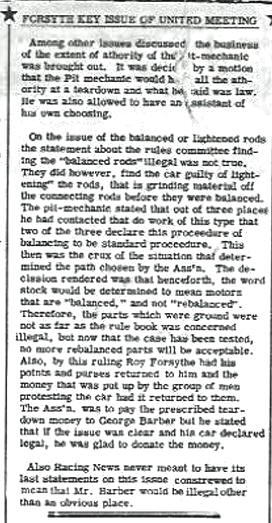
United Racing Club Racing News 1961 Issue
Courtesy of Craig McDonald
Article reports on the flap going on in
1961 about Barber's "unbalanced" engine components.
Disappointed, Barber was determined to save the
flathead racing from extinction. As Northeastern was closing its doors, and T
Road was out of reach, he took some land in the boondocks of his Bradford
township and carved Bear Ridge Speedway out of the dense woods. Legend has it
that track builders scared more than one bear from the site in the construction
of the "Home of The Coupes', which eventually made its was onto the pages of
Stock Car Racing magazine. As coupe racing was becoming more sophisticated
at places like Airborne, Thunder Road, and Catamount, low - buck teams and
lovers of the flathead racing engine flocked to Bear Ridge to run at the only
place left for them.
Barber ran the track until selling it to the Chuck Elms
family. He actually fielded a flathead race car up into the 1970's. At 90,
George was still active. We lost him recently. It completely escaped logic why he is not in the
NEAR Hall of Fame. Hell, he should have been in the first class of nominees. He
occasionally speaks with racing historians like Cho Lee, and has generously let
Lee take some of his old trophies and other materials to help preserve racing
history. My hat is off to George Barber - and pioneers like him.
POST THUNDER ROAD/ BEAR RIDGE ERA
[The Late 1960's Cars and
More]
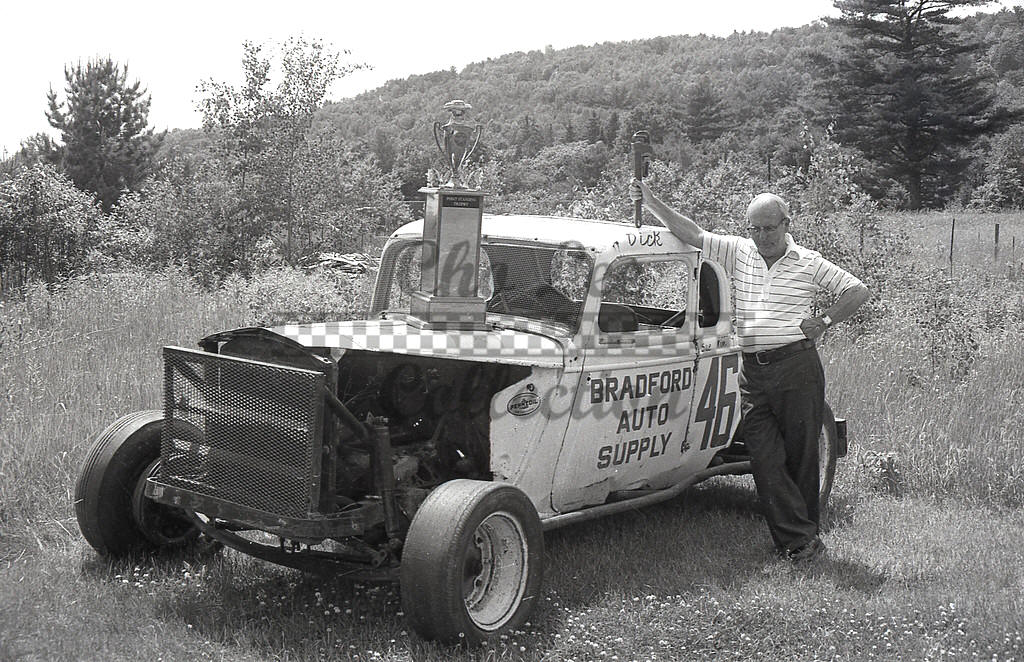 Courtesy of Barber Collection From Cho Lee George with one of his last cars. |
|
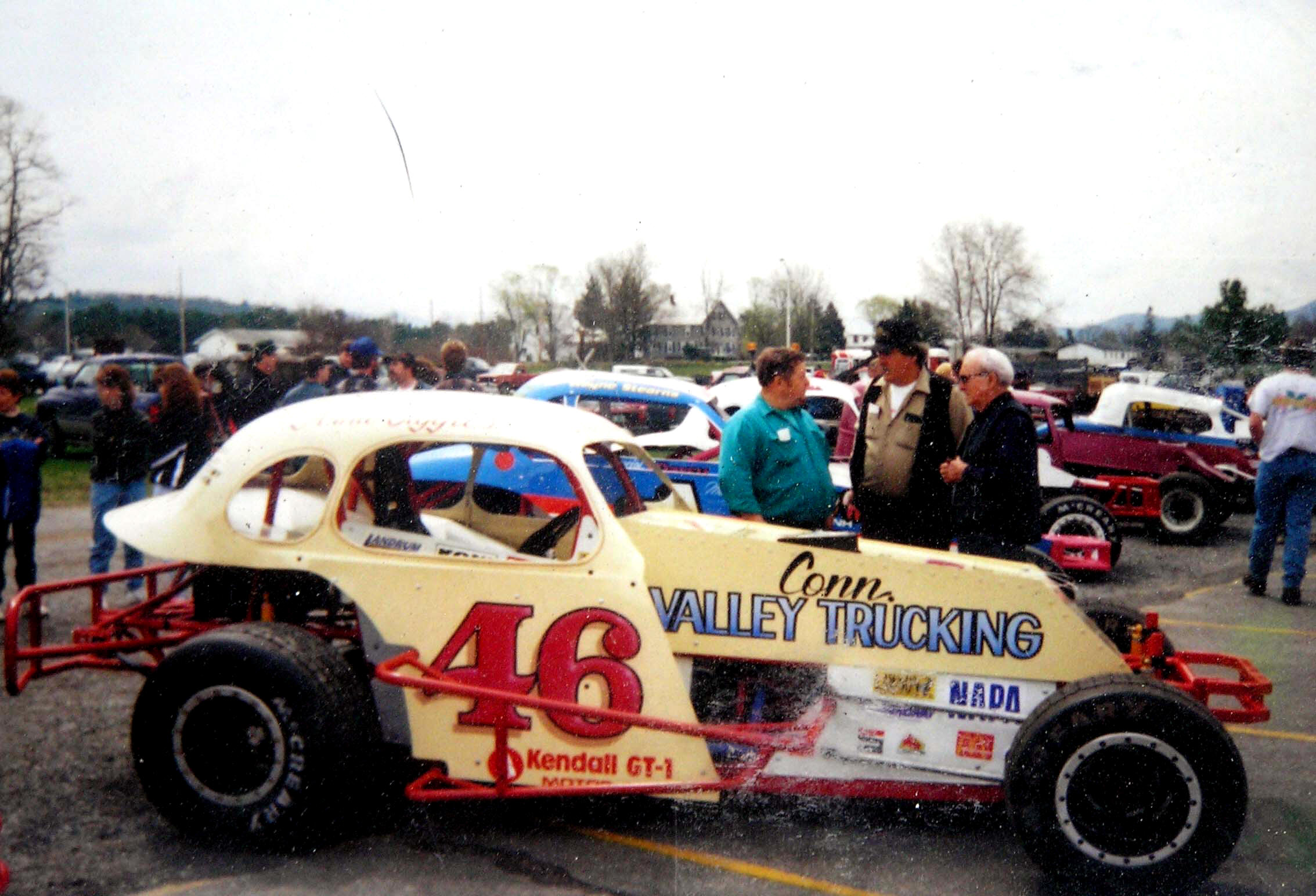 Courtesy of Cho Lee The last Barber car, at Bear Ridge. It was driven by Arnie Stygles to the track's last flathead win. This well into the track's years and was quite state of the art. |
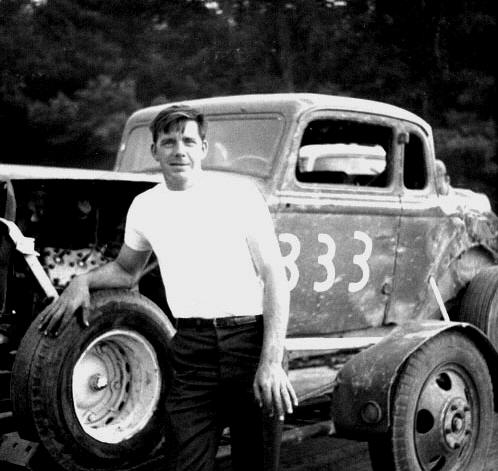 Courtesy of Cho Lee Eastern Vermont businessman Herbie Gray not only\ sold Barber the land for Bear Ridge, but he also raced there. Generations later, Grays are still racing. |
 Bradford United Opinion May 9, 1968. Ayup, George Baw - buh's buildin' a track up thay - uh on the mountain. Pawt 1. |
 Bradford United Opinion May 9, 1968. Ayup, George Baw - buh's buildin' a track up thay - uh on the mountain. Pawt 2, by jeezuz. |
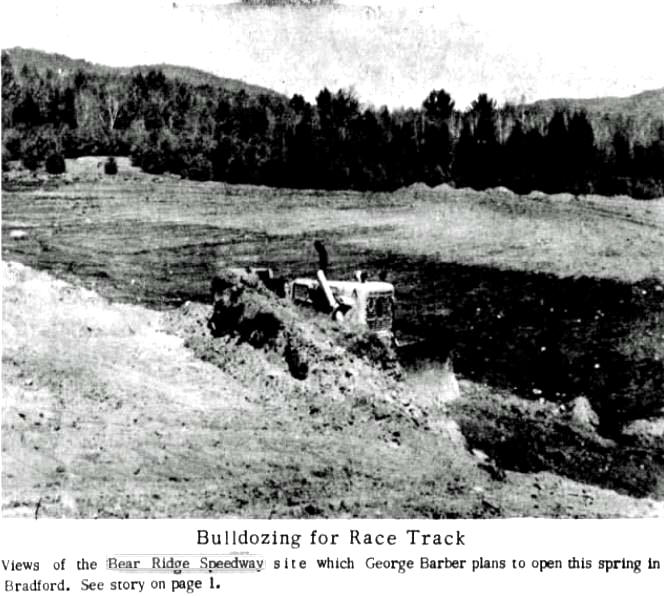 Bradford United Opinion May 9, 1968. Ayup, George Baw - buh's buildin' a track up thay - uh on the mountain. A pick -shuh of Will-ud's doz - uh. |
 Bradford United Opinion A 1968 ad. |
Bear Ridge has its own page, so we aren't going to go crazy with clippings and photos here. The track was sold over to Chuck Elms and Robert Nutting in the early 1970's. Elms family still has it. |
 Courtesy of Cho Lee Probably From Barber Collection Typical track poster. |
George Barber, unfortunately was such an unassuming man that he placed very little stock in the trophies and awards he had accomplished. Most of them were stored in an outbuilding, and shared their accommodations with chickens. So, many of the trophies' inscriptions are gone or unreadable. For example, we are not sure which is his most important ones. There is one, from a "Colchester-Bayview Speedway, for instance; and no one even know which Colchester track it was. Most agree it was probably Barcombs' track, near the Malletts Bay Drive - In.
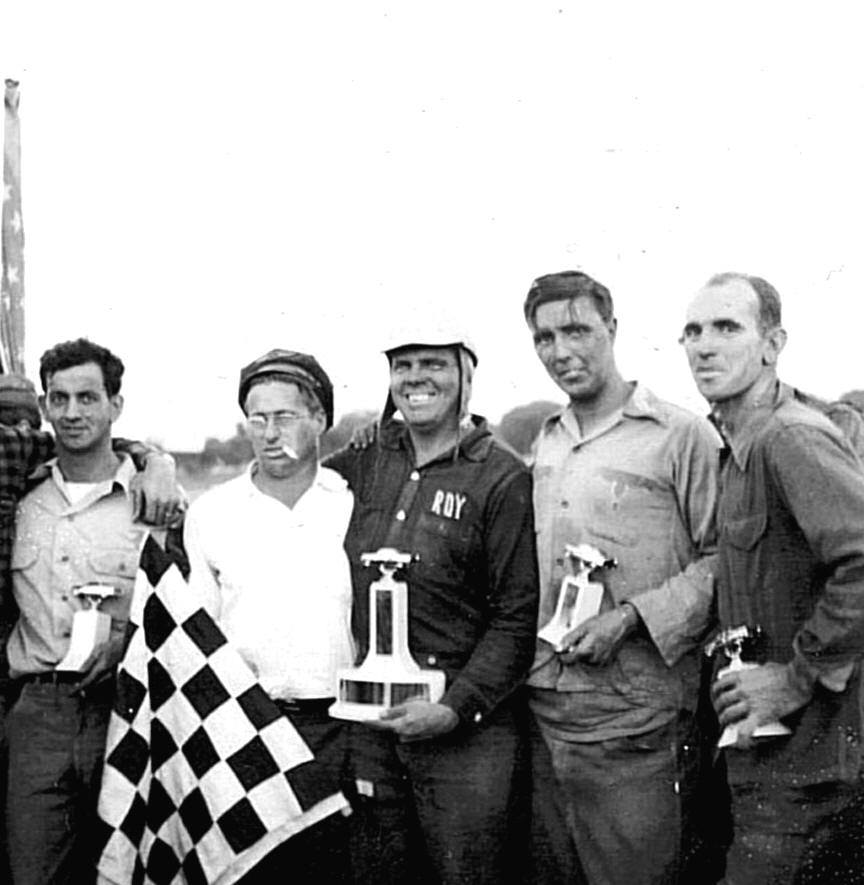
Frank Hart Collection Courtesy of Arnie Hill
Forsythe is seen here holding the
Colchester - Bayview trophy shown
below.
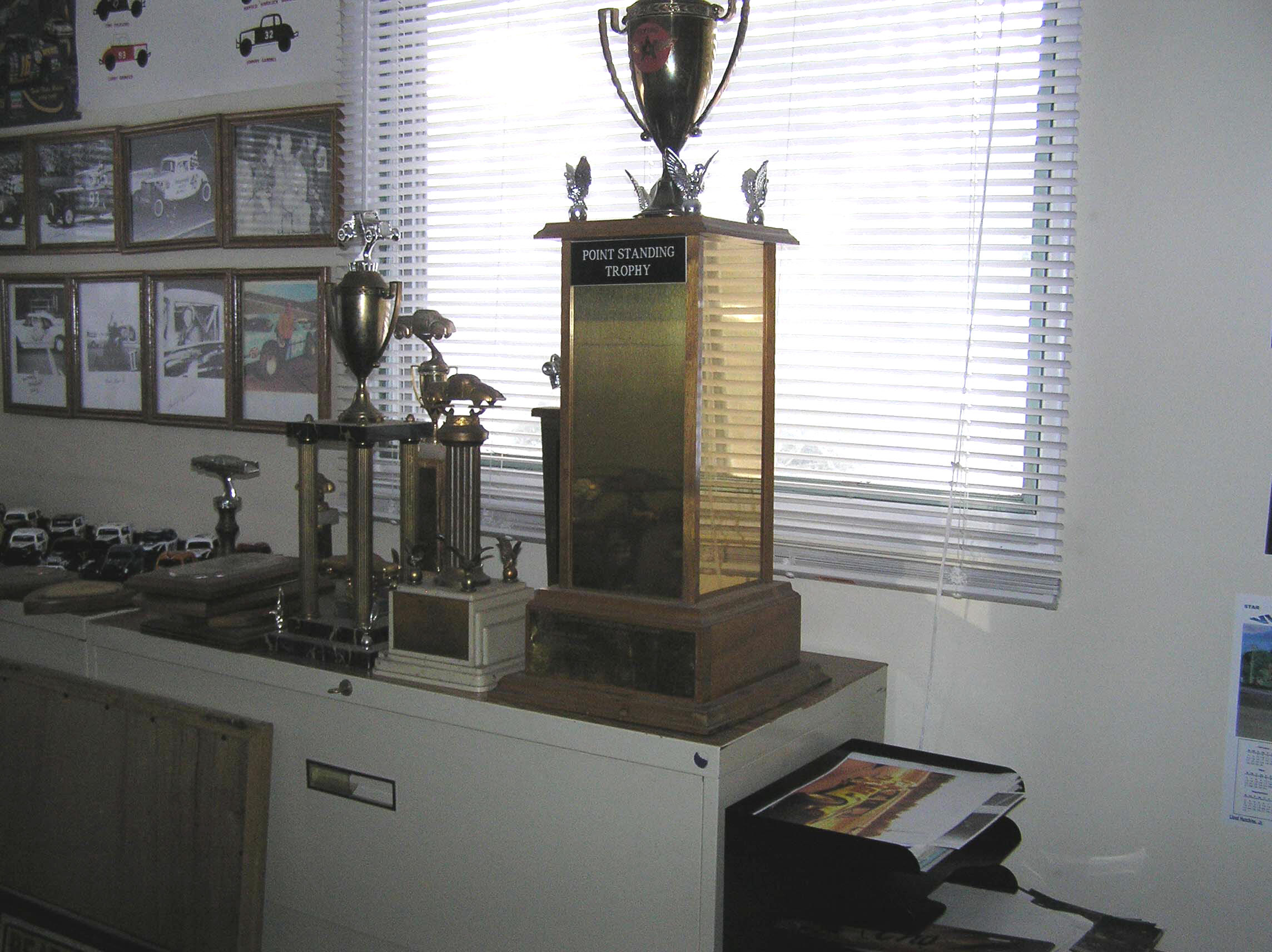 Barber Collection Courtesy of Cho Lee One of the several trophies made available from the Barber Collection to Cho Lee. |
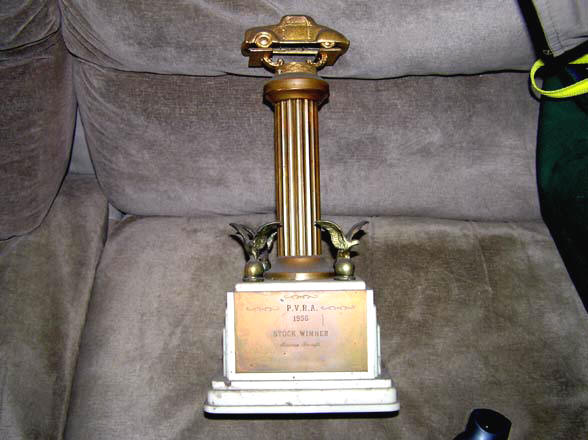 Barber Collection Courtesy of Cho Lee A 1955Trophy |
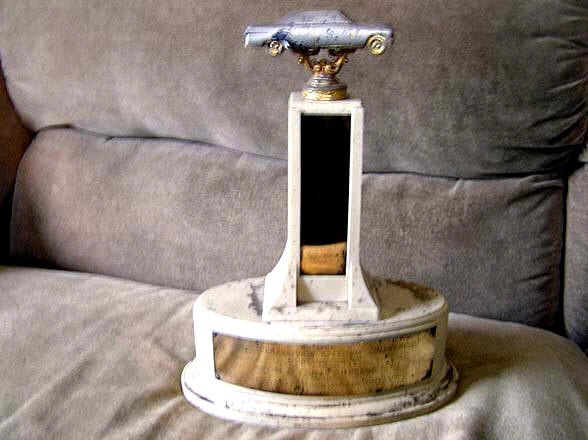 Barber Collection Courtesy of Cho Lee A trophy from Colchester Bayview Speedway. |
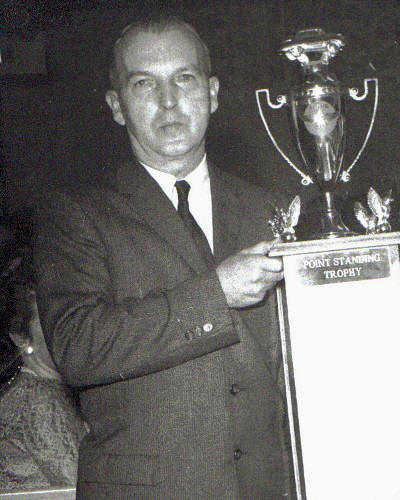 Courtesy of Barber Collection From Cho Lee George with a Thunder Road trophy. |
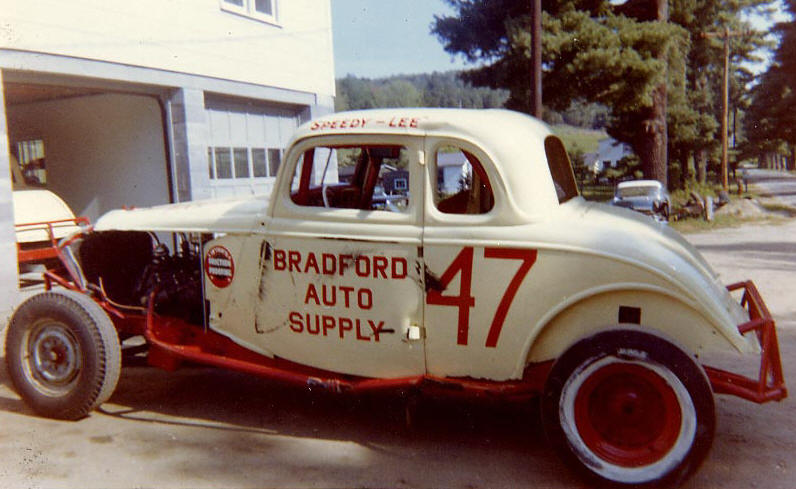
Courtesy of Ken Paulsen
The Ingerson car looks like
it had some spirited action the night before as the 46 car sits
in the relative safety of George Barber's garage. Check out how high that donut
is on the driver's side.
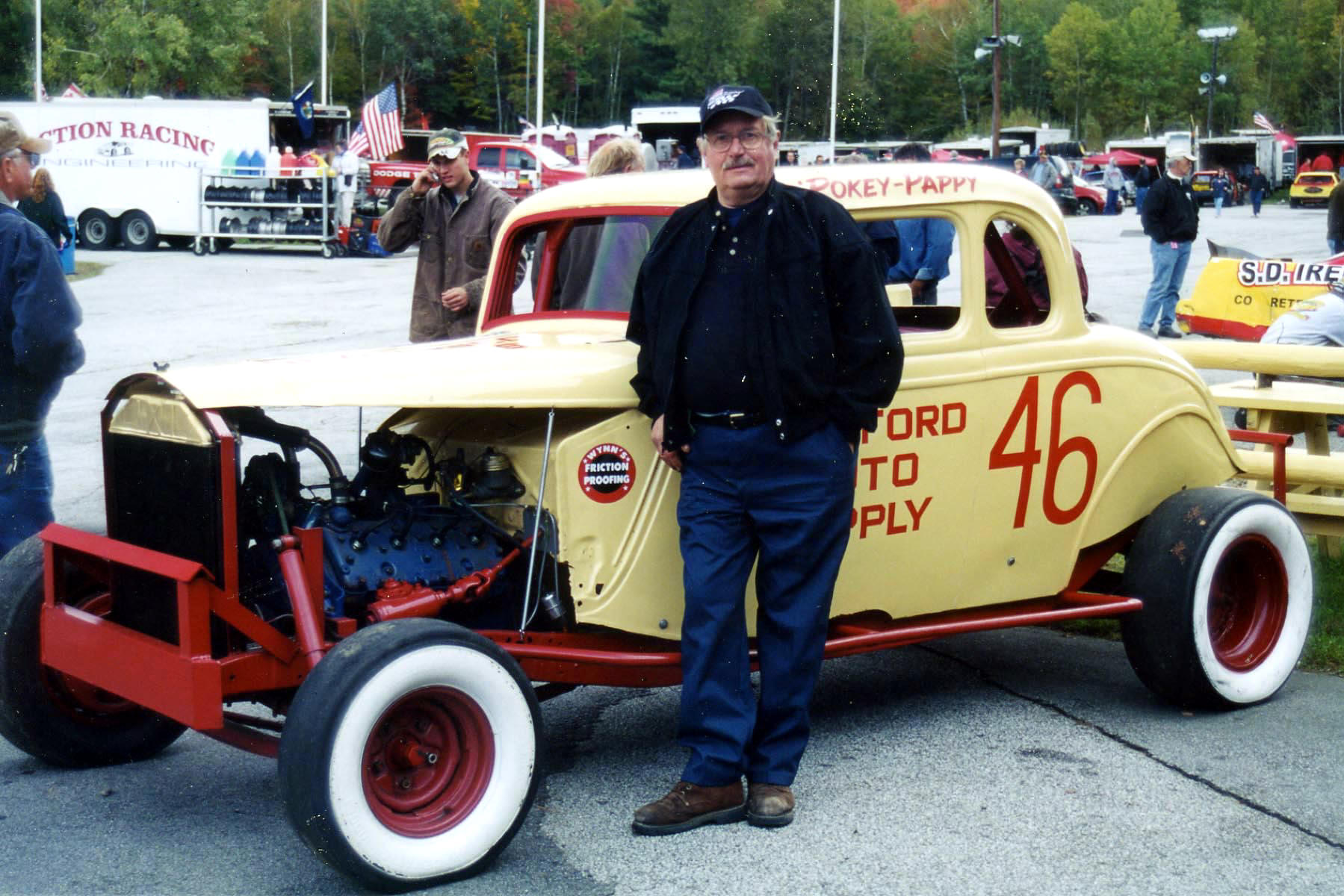
Courtesy of Ken Paulsen
Junior Coffin poses with is
old car at a recent Milk Bowl at Thunder Road.
|
|
 |
|
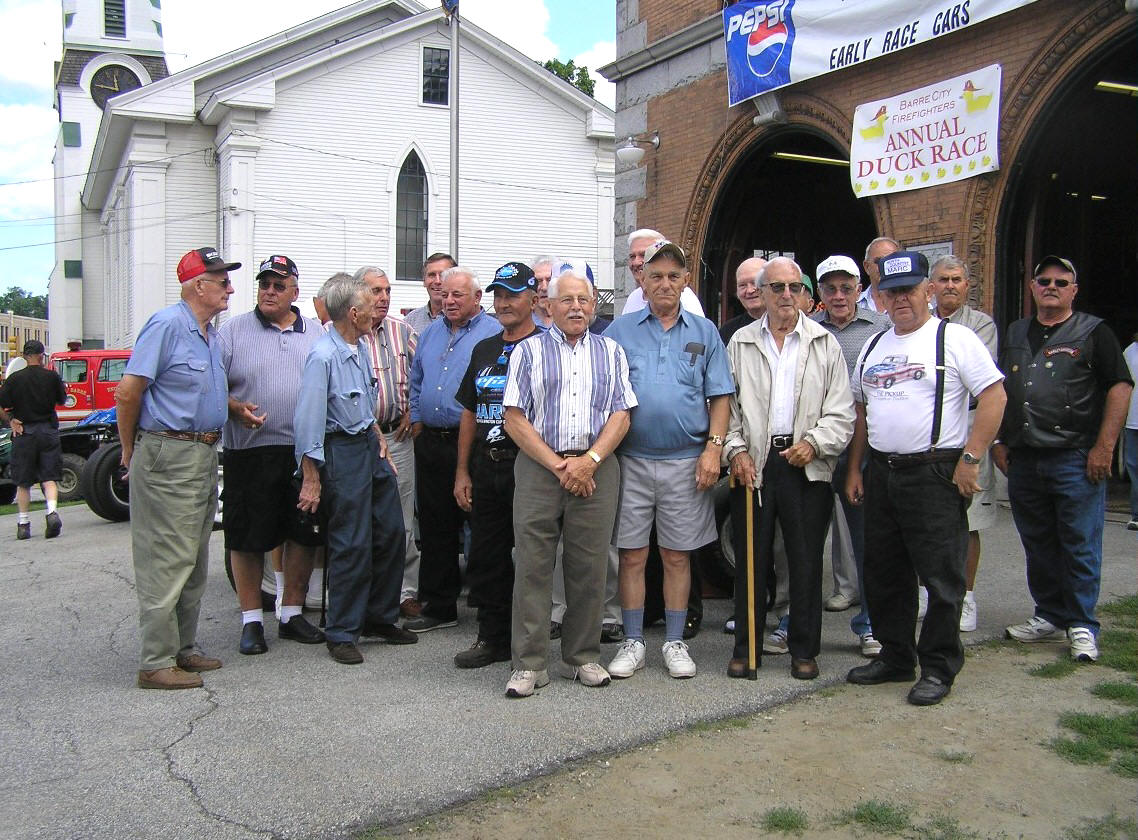
Courtesy of Cho Lee
A reunion in Barre around 2005. George
is front row, with cane. Early official Emilio Girelli is at his right.
MORE TO COME
Return to the Main Page
Return to the
Main News Page
Return
to the All Links Page